Saturday, August 18, 2018

Abanindranath Tagore CIE (অবনীন্দ্রনাথ ঠাকুর) (7 August 1871 – 5 December 1951) was the principal artist and creator of the "Indian Society of Oriental Art". He was also the first major exponent of Swadeshi values in Indian art, thereby founding the influential Bengal school of art, which led to the development of modern Indian painting[1][2] He was also a noted writer, particularly for children. Popularly known as 'Aban Thakur', his books Rajkahini, Budo Angla, Nalak, and Khirer Putul are landmarks in Bengali language children's literature.
Tagore sought to modernise Mughal and Rajput styles to counter the influence of Western models of art, as taught in art schools under the British Raj and developed the Indian style of painting, later known as Bengal school of art. Such was the success of Tagore's work that it was eventually accepted and promoted as a national Indian style within British art institutions under the epithet of Indian Society of Oriental Art.

Personal life and background

Abanindranath Tagore was born in JorasankoCalcuttaBritish India, to Gunendranath Tagore. His grandfather was Girindranath Tagore, the second son of "Prince" Dwarkanath Tagore. He was a member of the distinguished Tagore family, and a nephew of the poet Rabindranath Tagore. His grandfather and his elder brother, Gaganendranath Tagore, were also artists.
Tagore learned art when studying at Sanskrit College, Kolkata in the 1880s. In 1890, around the age of twenty years, Abanindranath attended the Calcutta School of Art where he learnt to use pastels from O. Ghilardi, and oil painting from Charles Palmer, European painters who taught in that institution.[3]
In 1889, he married Suhasini Devi, daughter of Bhujagendra Bhusan Chatterjee, a descendant of Prasanna Coomar Tagore. At this time he left the Sanskrit College after nine years of study and studied English as a special student at St. Xavier's College, which he attended for about a year and a half.
He had a sister, Sunayani Devi.[4]

Painting career

"Ganesh-janani" by Abanindranath Tagore

Early days

In the early 1890s several illustrations were published in Sadhana magazine, and in Chitrangada, and other works by Rabindranath Tagore. He also illustrated his own books.About the year 1897 he took lessons from the vice-principal of the Government School of Art, studying in the traditional European academic manner, learning the full range of techniques, but with a particular interest in watercolour. At this time he began to come under the influence of Mughal art, making a number of works based on the life of Krishna in a Mughal-influenced style. After meeting E. B. Havell, Tagore worked with him to revitalise and redefine art teaching at the Calcutta School of art, a project also supported by his brother Gaganendranath, who set up the Indian Society of Oriental Art.
Tagore believed in the traditional Indian techniques of painting. His philosophy rejected the "materialistic" art of the west and came back to Indian traditional art forms. He was influenced by the Mughal school of painting as well as Whistler's Aestheticism. In his later works, Tagore started integrating Chinese and Japanese calligraphic traditions into his style.

Later career

Tagore believed that Western art was "materialistic" in character, and that India needed to return to its own traditions to recover spiritual values. Despite its Indocentric nationalism, this view was already commonplace within British art of the time, stemming from the ideas of the Pre-Raphaelites. Tagore's work also shows the influence of Whistler's Aestheticism. Partly for this reason many British arts administrators were sympathetic to such ideas, especially as Hindu philosophy was becoming increasingly influential in the West following the spread of the Theosophy movement. Tagore believed that Indian traditions could be adapted to express these new values, and to promote a progressive Indian national culture.
His finest achievement however was the Arabian Night's series which was painted in 1930. In these paintings he uses the Arabian Nights stories as a trope for looking at colonial Calcutta and picturing its emergent cosmopolitanism.[5]
With the success of Tagore's ideas, he came into contact with other Asian cultural figures, such as the Japanese art historian Okakura Kakuzō and the Japanese painter Yokoyama Taikan, whose work was comparable to his own. In his later work, he began to incorporate elements of Chinese and Japanese calligraphic traditions into his art, seeking to construct a model for a modern pan-Asian artistic tradition which would merge the common aspects of Eastern spiritual and artistic culture.[6]
His close students included Nandalal Bose, Samarendranath Gupta, Kshitindranath Majumdar, Surendranath Ganguly, Asit Kumar HaldarSarada UkilKalipada Ghoshal , Manishi DeyMukul DeyK. Venkatappa and Ranada Ukil.
For Abanindranath, the house he grew up in (5 Dwarakanath Tagore Lane) and its companion house (6 Dwarakanath Tagore Lane) connected two cultural worlds – 'white town' (where the British colonizers lived) and 'black town' (where the natives lived). According to architectural historian Swati Chattopadhay, Abanindranath "used the Bengali meaning of the word, Jorasanko – 'double bridge' to develop this idea in the form of a mythical map of the city. The map is, indeed, not of Calcutta, but an imaginary city, Halisahar, and is the central guide in a children's story Putur Boi (Putu's Book). The nineteenth-century place names of Calcutta, however, appear on this map, thus suggesting we read this imaginary city with the colonial city as a frame of reference. The map uses the structure of a board game—golokdham—and shows a city divided along a main artery; on one side a lion-gate leads to the Lal-Dighi in the middle of which is the 'white island.'[7]
Abanindranath maintained throughout his life a long friendship with the London-based artist, author, and eventual president of London's Royal College of Art William Rothenstein. Arriving in the autumn of 1910, Rothenstein spent almost a year surveying India's cultural and religious sites, including the ancient Buddhist caves of Ajantathe Jain carvings of Gwalior; and the Hindu panoply of Benares. He ended up in Calcutta, where he drew and painted with Abanindranath and his students, attempting to absorb elements of Bengal School style into his own practice.[8]
However limited Rothenstein's experiments with the styles of early Modernist Indian painting were, the friendship between him and Abanindranath ushered in a crucial cultural event. This was Rabindranath Tagore's soujourn at Rothenstein's London home, which led to the publication of the English-language version of Gitanjali and the subsequent award to Rabindranath in 1913 of the Nobel Prize for Literature.
The publication of Rabindranath Tagore's Gitanjali in English brought the Tagore family international renown, which helped to make Abanindranath's artistic projects better known in the west.

Rediscovery

Within a few years of the artist's death in 1951, his eldest son, Alokendranath, bequeathed almost the entire family collection of Abanindranath Tagore's paintings to the newly founded Rabindra Bharati Society Trust that took up residence on the site of their famous house on No. 5, Dwarakanath Tagore lane. In a situation where only a small number of the artist's paintings had been collected or given away in his lifetime, the Rabindra Bharati Society became the main repository of Abanindranath's works of all periods. Banished into trunks inside the dark offices of the society, these paintings have remained in permanent storage ever since. Caught in these many binds the full range and brilliance of Abanindranath's works could never be effectively projected into a public domain. They remained intimately known only to a tiny circle of Art connoisseurs and scholars in Bengal – some of whom like K. G. Subramanyan and R. Siva Kumar have long argued that the true measure of Abanindranath's talent is to be found in his works of the 1920s, 30s and 40s but could do little to offer up a comprehensive profile of the master for the contemporary art world. R. Siva Kumar's Paintings of Abanindranath Tagore (2008) is a path-breaking discovery in re-defining Abanindranath's art.

List of paintings

A list of paintings by Abanindranath Tagore:[9]
                                                   
Some of the greatest hindu paintings. as you can see above picture we can see that elephant of lord vishnu and nandi{ox}.
Image result for Hinduism

                                                                     Image result for Hinduism

        Image result for Hinduism                         Image result for Hinduism


                                                     Image result for Hinduism
some of the oldest caraving  of india


GREAT PAINTERS of INDIA    
                                                                                                       {REFFRENCE FROM :VARIOUS SITES AND BLOG}


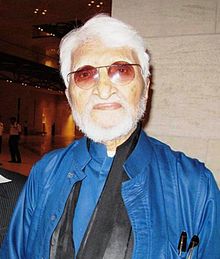
                                                            MFHussain2.jpg

Maqbool Fida Husain (17 September 1915 – 9 June 2011)[2] was a modern Indian painter of international acclaim, and a founding member of Bombay Progressive Artists' Group.
Husain is associated with Indian modernism in the 1940s. His early association with the Bombay Progressive Artists' Group used modern technique, and was inspired by the "new" India after The Partition of 1947. His narrative paintings, executed in a modified Cubist style, can be caustic and funny as well as serious and sombre. His themes—sometimes treated in series—include topics as diverse as Mohandas K. GandhiMother Teresa, the Ramayana, the Mahabharata, the British raj, and motifs of Indian urban and rural life. Early in his painting career, and until his death, he enjoyed depicting the lively and free spirit of horses in many of his works.Husain is the most celebrated and internationally recognized Indian artist of the 20th century. Husain is primarily known for his paintings, but is also known for his drawings and his work as a printmaker, photographer, and filmmaker. Some of his later works stirred controversy, as they depicted traditional deities of India in non-traditional ways including nude portrayals of the deities.
He also directed a few movies. In 1967, he received the National Film Award for Best Experimental Film for Through the Eyes of a Painter.[3] In 2004, he directed Meenaxi: A Tale of Three Cities, a film he worked on with his artist son Owais Husain, which was screened in the Marché du Film section of the 2004 Cannes Film Festival.[4]


                                                        Image result for Raja Ravi Varma
Raja Ravi Varma[3][4] (29 April 1848 – 2 October 1906) was a celebrated Malayali Indian painter and artist. He is considered among the greatest painters in the history of Indian art for a number of aesthetic and broader social reasons. Firstly, his works are held to be among the best examples of the fusion of European techniques with a purely Indian sensibility. While continuing the tradition and aesthetics of Indian art, his paintings employed the latest European academic art techniques of the day. Secondly, he was notable for making affordable lithographs of his paintings available to the public, which greatly enhanced his reach and influence as a painter and public figure. Indeed, his lithographs increased the involvement of common people with fine arts and defined artistic tastes among common people for several decades. In particular, his depictions of Hindu deities and episodes from the epics and Puranas have received profound acceptance from the public and are found, often as objects of worship, across the length and breadth of India.[citation needed]
Raja Ravi Varma was closely related to the royal family of Travancore of present day Kerala state in India. Later in his life, two of his granddaughters were adopted into that royal family, and their descendants comprise the totality of the present royal family of Travancore, including the latest three Maharajas (Balarama Varma IIIMarthanda Varma III and Rama Varma VII).


                                                              Image result for Mohan Samant
Mohan Samant (born Manmohan Balkrishna Samant in Mumbai [then Bombay] in 1924 - New York City, 2004) was an early Indian modernist painter and member of the Progressive Artists Group. He was also a lifelong player of the sarangi, an Indian bowed string instrument.

Samant was born Manmohan Balkrishna Samant into a middle-class Brahmin family in Goregaon, a suburb of Mumbai (then Bombay), India, in 1924. The fourth child of eight, he grew up in a cultured environment. Samant's father, Balkrishna Ramchandra Samant, was a headmaster and his mother a homemaker. His younger sister, Vasudha Patil, an accomplished novelist, has written that their parents encouraged the family's interest in music, art, theater, movies, travel, and writing, and Samant displayed an early proficiency in and dedication to both music and the visual arts.[1]
Samant received his diploma from the Sir J.J. School of Art in 1952, where he studied under S.B. (Shankar Balwant) Palsikar. In 1954 he was awarded the Governor's Prize and the silver medal for water colors at the Bombay Art Society Annual Exhibition.[2]
In 1952, Samant joined the Progressive Artists' Group[3] and exhibited with them in several shows, including the 1953 exhibition, Progressive Artists' Group: Gaitonde, Raiba, Ara, Hazarnis, Khanna, Husain, Samant, Gade, at the Jehangir Art Gallery, Mumbai.[4] He also participated in the Bombay Group, a successor to the Bombay PAG. According to artist Baburao Sadwelkar, the Bombay Group, which included Samant as well as Hebbar, Ara, Chavda, Kulkarni, Laxman Pai, Har Krishnan Lall, and Sadwelkar, had "six big exhibitions [between 1957 and 1964], which were received extremely well."[5] Samant did not mention the Bombay Group in interviews or recorded conversations, but a review from The Times of India[6] confirms that he had works in their November 1956 exhibition.
In 1956, Samant was awarded the Gold Medal at the Bombay Art Society's group exhibition, another at the Calcutta Art Society show, and the Lalit Kala Akademi All India Award. That same year, he took part in the seminal exhibition, Eight Painters: Bendre, Gaitonde, Gujral, Husain, Khanna, Kulkarni, Kumar, Samant, curated by Thomas Keehn, and in the Venice Biennale.[7] Samant spent 1957-58 in Rome on a scholarship awarded by the Italian government. In February 1959, a Rockefeller Fellowship took him to New York City, where he would remain until 1964.[8]
Exhibitions during Samant's first New York period included what is considered the first showing of the Progressive Artists' Group in America, Trends in Contemporary Painting from India: Gaitonde, Husain, Khanna, Kumar, Padamsee, Raza, Samant, Souza, curated by Thomas Keehn and held at the Graham Gallery, New York,[9] as well as A Collection of Contemporary Art, Art in Embassies Committee, Museum of Modern Art, New York (1961), Recent Acquisitions, Museum of Modern Art, New York (1963), and Dunn International: 102 Best Painters of the World, Beaverbrook Art Gallery, Fredericton, New Brunswick, Canada and the Tate Gallery, London (1963).[10]
The organizers of the legendary Dunn exhibition in 1963—whose international selection committee included Alfred Barr of The Museum of Modern Art, New York and Sir Anthony Blunt, Surveyor of the Queen's Pictures—chose works by Edward Hopper, Robert Rauschenberg and Willem de Kooning, among other giants of contemporary art. Samant was one of only two newcomers included in the exhibition, and was singled out for special recognition in the Time article on the show.[11] He was profiled again in the magazine a year later.[12] Samant spent 1965–68 in Mumbai. In 1968, like S.H. Raza and F.N. Souza before him, he left India permanently. He settled in New York, where he continued to work and exhibit internationally. In 2000, Samant received the Asian American Heritage Award for lifetime achievement in the arts. In January 2004, not long after a retrospective in India, Samant died in New York.[13]
Samant participated in the seminal international exhibitions of twentieth-century Indian modernism. Ranjit Hoskote, internationally renowned Indian poet and art critic, wrote in 2008 that Mohan Samant was "the missing link in the evolutionary narrative of contemporary art in India."[14] As observed by Jeffrey Wechsler in his essay on Mohan Samant and his place in twentieth-century modernism, "Samant's practice was the antithesis of a signature style. Throughout his career, he delved into divergent materials and techniques and constantly shifted imagery. While some of his processes and forms can be perceived on a regular basis over long periods of time, there was no hewing to a given image, endlessly repeated." He stated that "I find that stagnation in style and the search for the same forms cause an artist to suffer an immense amount of laboriousness in his work. Samant's art is, instead, determinedly far-reaching and inquisitive, and is inspired by the whole history of human visual creativity. Samant stated straightforwardly that his sources derived from five thousand years of art from varied civilizations. These included the cave paintings of Lascaux, Egyptian wall paintings and hieroglyphs, Indian miniatures and murals, Precolumbian ceramics, African sculpture, and the modernism of Pablo Picasso, Henri Matisse, and Paul Klee."[15]

Exhibitions and archivesFrom his first showing until 1953, Samant took part in exhibitions around the world, held in galleries and museums in Canada, the United States, England, India and Japan. His work is in such public collections as the Museum of Modern Art (New York,) the Hirshhorn Museum and Smithsonian American Art Museum (Washington, D.C.) and the National Gallery of Modern Art (New Delhi).